Glass fusing art of Isabelle Scheltjens in luxury interiors: what sets it apart from every other wall art
The hardest problem in high-end interior design is also the most frequently underestimated one. Structure can be resolved with the right architect. Materials can be sourced anywhere in the world. But the moment a space is finished, when every surface, every fixture and every piece of furniture has been placed, something is often still missing.
A luxury interior without a commanding piece of original art feels resolved but not alive. It has form without presence. The designers and architects who consistently produce spaces that are remembered and talked about long after completion share one habit: they choose original art first and let everything else follow. Among the artists they return to, Isabelle Scheltjens and her glass fusing art occupy a category of their own.
What glass fusing wall art of Isabelle Scheltjens does to a room
A surface that lives with the light
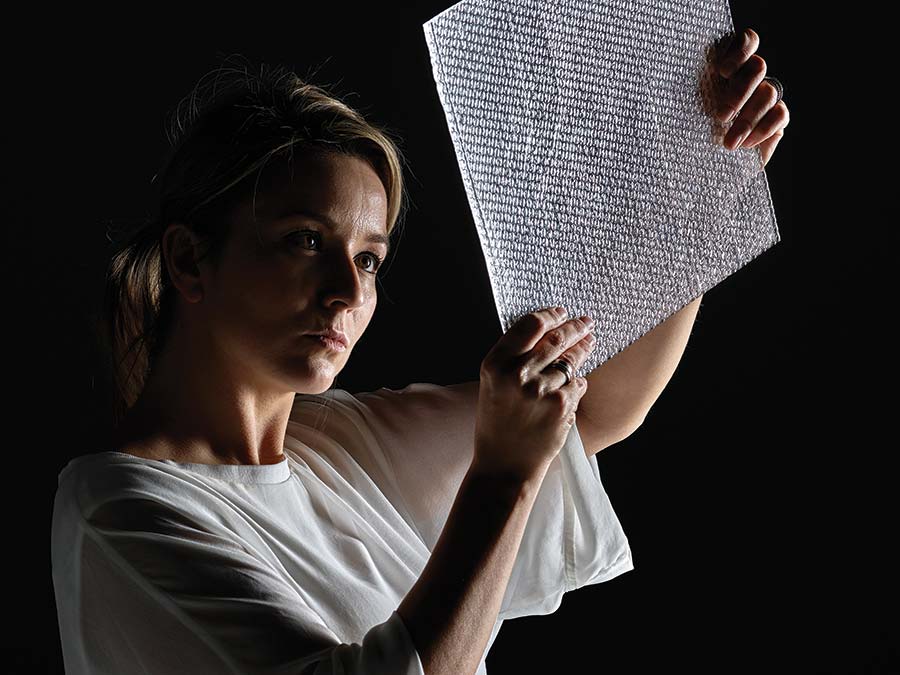
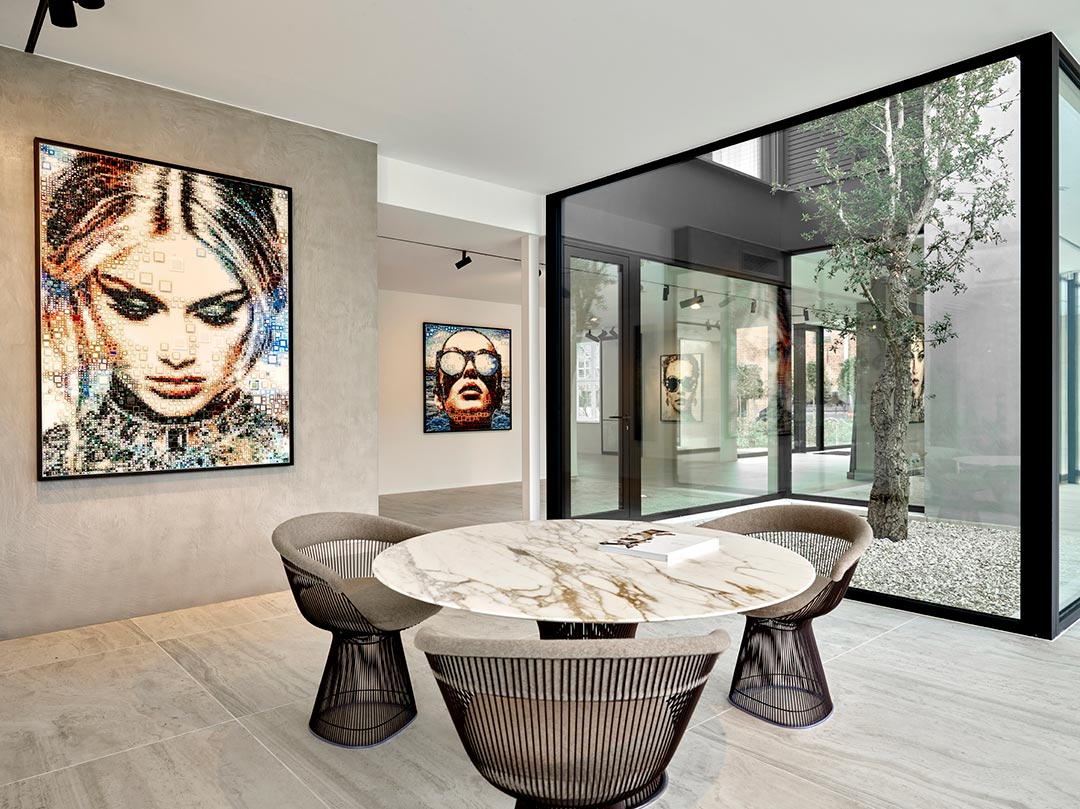
A glass fusing portrait by Isabelle Scheltjens does something that no work made from synthetic materials can do: it changes with the light.
Because glass is a living material, the finished work responds to every shift in its environment. Morning light brings out the warmth in the skin tones. Evening light deepens the shadows. Artificial light makes the surface glow from within.
Glass versus synthetic surfaces
This is the defining characteristic of glass fusing wall art by Isabelle Scheltjens, and it is the reason why it commands a room in a way that fundamentally differs from work made in other materials. Synthetic surfaces reflect light from a single plane. Glass fusing wall art refracts light, transmits it and holds it in a way that makes the work appear to generate its own illumination. In a high-end interior, that difference is immediately visible and immediately felt.

The material difference that matters for long-term projects
Glass does not age the way other materials do
Architects and interior designers working on long-term projects need to think about how a work will behave over years, not just in the photography session after installation. Glass is one of the most stable materials in the history of art. It does not yellow, it does not crack under normal conditions, and the colour embedded in Isabelle Scheltjens’ glass fusing wall art is the colour of the glass itself, fired at 800 degrees Celsius into a permanent bond that will not fade, peel or shift over decades.
What happens to synthetic materials over time
Works made from synthetic materials age differently. Resins and epoxy compounds are sensitive to UV exposure and temperature variation, and over time those surfaces can yellow, dull or develop micro-cracks that compromise the visual integrity of the work. For a designer putting their reputation behind a recommendation, the long-term behaviour of the material they specify is a real professional consideration, not a secondary one.
A work of original glass fusing art by Isabelle Scheltjens installed in a lobby today will look the same in fifteen years. That is precisely what institutional and high-end residential clients need to hear.

Scale, format and the process
Fully tailored to the space
One of the most practical advantages of working with Isabelle Scheltjens is her approach to works made to commission for interior designers and architects. Every aspect of a glass fusing art commission can be specified to suit the space: format, proportion, colour palette, subject matter and installation requirements.
This makes her work genuinely compatible with project-based design, where the art is created as part of the spatial concept rather than chosen from a catalogue.
How the process works
The process begins with a consultation in person or remotely, in which Isabelle reviews the space, the brief and the visual references. A format and colour direction are agreed upon before work begins, and production timelines are clearly communicated from the outset.
Works have been shipped and installed across Europe, the Middle East, the United States and Asia. Designers working with Isabelle Scheltjens receive a glass fusing wall art work made specifically for the space it will occupy. There is no risk of finding exactly the same piece in another interior because every piece of glass has its own unique place.
Reference projects with her wall art that speak for themselves
Collections that do not happen by accident
The collections that include original glass fusing art by Isabelle Scheltjens are not accidental. Gordon Ramsay chose her work for his personal environment. Lotus Bakeries and Kevin De Bruyne have each acquired pieces that now form part of collections built on a long-standing commitment to quality. Pierce Brosnan owns one of her art pieces and her work has found a place in some of the most exclusive galleries in the world. These placements reflect a recognition among collectors and curators that her technique and her command of colour set her apart from anything produced through conventional or mechanised methods.
What those references communicate to your clients
For interior designers presenting her glass fusing wall art to clients, these reference points carry significant weight. They communicate not just the quality of the work but the level of discernment required to recognise it. A glass fusing portrait by Isabelle Scheltjens tells any visitor to a space exactly what kind of environment they have walked into.

Original glass fusing wall art versus the alternatives
The distinction that matters professionally
The contemporary art market offers a wide range of large-format portrait work at various price points, and much of it is technically accomplished. But there is a meaningful distinction between work made from a genuine artistic tradition using a material with centuries of proven durability, and work that uses modern industrial materials to approximate the same visual effect at lower cost.
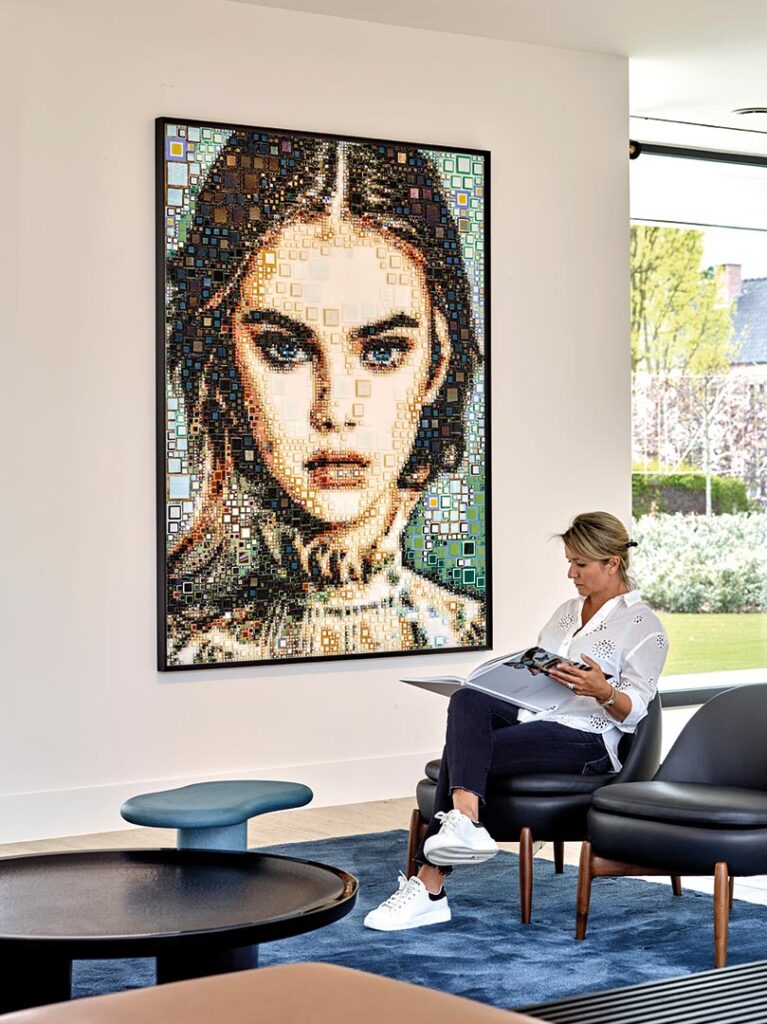
Every glass fusing portrait by Isabelle Scheltjens is built from an average of 25,000 individually positioned glass fragments, arranged across two to three layers and fired at 800 degrees Celsius. Some works reach 80,000 fragments. That process cannot be mechanised, outsourced or approximated. It takes years to master, and only one artist has mastered it at this scale.
Many competitors rely on predictable colour choices, shaped by software and guided by safe decisions. The result looks flat and calculated, as though the computer already made the artistic choices before the artist even began. Isabelle Scheltjens works from a solid foundation in colour theory, giving her pieces a depth and boldness that stand apart within glass art. Every layer of colour reflects a deliberate choice, built on an understanding of light, contrast and harmony rather than a template.
The original, refined over a decade
For the interiors where original glass fusing art by Isabelle Scheltjens belongs, the distinction is a matter of professional integrity. Glass fusing portraiture as she has developed it is the original: the technique she invented, in the material she chose for its unique properties, refined over a decade of international exhibition and private collection.
The work holds its value, its presence and its meaning precisely because of what it is made from and how it is made.
About Isabelle Scheltjens
Isabelle Scheltjens is a Belgian contemporary artist and the world’s only practitioner of photorealistic glass fusing portraiture at this scale. Her work spans glass fusing wall art, marble sculptures and bronze sculptures. Works are available for private purchase, corporate acquisition and art rental. Isabelle accepts a limited number of works made to commission each year for collectors and interior design projects worldwide.